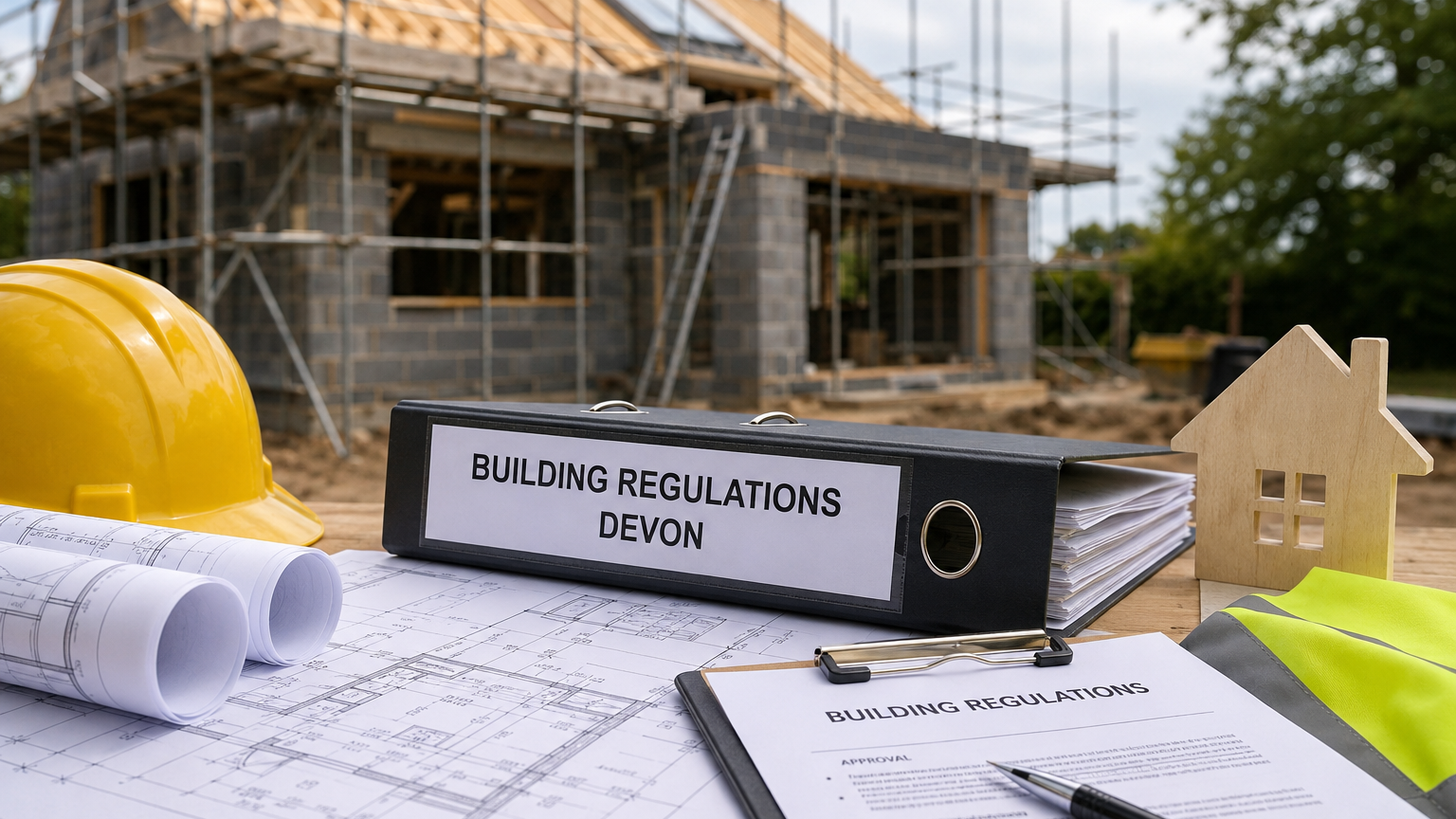
If you’re planning any form of construction or renovation in Devon, building regulations are something you cannot overlook.
Unlike planning permission, which focuses on how a development looks or impacts the surrounding area, building regulations are concerned with how a building is constructed, ensuring it is safe, structurally sound, and fit for use.
Understanding these requirements early can help you avoid delays, additional costs, and potential issues during or after your project.
Quick Summary
Building regulations in Devon ensure that construction and renovation projects meet legal standards for safety, structural integrity, ventilation, energy efficiency, and accessibility. Understanding approval requirements early can help homeowners avoid delays, unexpected costs, and compliance issues during their project.
What Are Building Regulations?
Building regulations are a set of legal standards that apply to most construction work in the UK.
They are designed to ensure that buildings meet minimum standards for:
- Structural integrity
- Fire safety
- Ventilation and air quality
- Energy efficiency
- Drainage and waste disposal
- Accessibility
In Devon, these regulations are enforced by local building control authorities or approved inspectors.
When Do Building Regulations Apply?
Building regulations apply to a wide range of projects, including:
- Home extensions
- Loft conversions
- Structural alterations (e.g. removing walls)
- New builds
- Garage conversions
- Roofing works
- Electrical and plumbing installations
Even smaller changes can require approval if they affect the structure or safety of the property.
Building Regulations vs Planning Permission
A common misconception is that planning permission and building regulations are the same — they are not.
Planning Permission
Focuses on appearance, location, and impact on surroundings.
Building Regulations
Focus on construction quality, safety, and performance.
You may need one, both, or neither depending on your project — but many projects require building regulations approval even if planning permission is not needed.
Key Areas Covered by Building Regulations
1. Structural Safety
Ensures that the building can safely support loads and remains stable.
This includes:
- Foundations
- Load-bearing walls
- Roof structures
- Steel beam installations
2. Fire Safety
Covers escape routes, fire resistance, and alarms.
Requirements may include:
- Fire doors
- Smoke alarms
- Protected escape routes
- Fire-resistant materials
3. Energy Efficiency
Regulations aim to improve insulation and reduce energy usage.
This includes:
- Wall and roof insulation
- Double or triple glazing
- Heating system efficiency
4. Ventilation
Ensures adequate airflow within the property.
This may involve:
- Extractor fans in kitchens and bathrooms
- Background ventilation
- Window openings
5. Drainage and Plumbing
Covers safe and effective waste disposal and water systems.
Includes:
- Drainage layouts
- Soil pipes
- Water supply systems
The Approval Process in Devon
To comply with building regulations, you’ll need to submit an application before starting work.
There are two main routes:
1. Full Plans Application
- Detailed drawings are submitted and approved before work begins
- Provides clarity upfront
- Reduces risk during construction
2. Building Notice
- A simpler, faster process for smaller projects
- Less detail required initially
- Greater responsibility on the builder to ensure compliance
Inspections During the Build
Building control will carry out inspections at key stages, such as:
- Foundation excavation
- Structural work (e.g. steel installation)
- Insulation installation
- Final completion
These inspections ensure the work meets required standards.
Building Regulations Checklist for Homeowners
Before starting your project, ensure you:
- Confirm whether building regulations approval is required
- Understand the difference between planning permission and building regulations
- Work with qualified contractors
- Allow time for inspections during the build
- Submit the correct application type
- Keep all compliance documents and certificates
Common Mistakes to Avoid
Many issues arise from a lack of understanding of building regulations.
Common mistakes include:
- Starting work without approval
- Assuming minor works don’t require compliance
- Using unqualified contractors
- Not allowing for inspection stages in timelines
Addressing these early helps prevent costly corrections later.
Final Thoughts
Building regulations are not just a formality — they play a crucial role in ensuring your project is safe, compliant, and built to last.
Taking the time to understand the requirements, or working with professionals who do, can help your project run more smoothly and avoid unnecessary setbacks.
Need Help Understanding Building Regulations in Devon?
Whether you’re planning a home extension, refurbishment, loft conversion, or structural alterations, understanding building regulations early can help your project run smoothly and avoid unnecessary delays.
Edleigh Construction can help guide you through the process, ensuring your project is completed safely, professionally, and in line with current regulations.
📧 info@edleighconstruction.co.uk
📞 07568 406 781
FAQs About Building Regulations in Devon
Do I always need building regulations approval in Devon?
Most structural or significant works require approval, even if planning permission is not needed.
How much does building regulations approval cost in Devon?
Costs vary depending on the size and type of project, but typically range from a few hundred to several thousand pounds.
Can I start work without building regulations approval?
No. Starting without approval can lead to enforcement action and additional costs to rectify non-compliant work.
Who checks that building regulations are followed?
Local authority building control officers or approved inspectors carry out inspections at various stages.
How long does building regulations approval take?
A Full Plans application can take several weeks, while a Building Notice can be processed more quickly for smaller projects.