House Extension Cost in Devon is one of the first things homeowners want to understand before starting a project. While it’s natural to ask, “How much will it cost?”, the answer depends on far more than the size of the extension alone.
The overall cost can vary depending on the design, specification, structural requirements, site conditions, and the quality of materials you choose. Two extensions of a similar size can end up with very different price tags because every property and every project is unique.
In recent years, construction costs across Devon have also been influenced by changes in material prices, labour availability, and increased demand for skilled trades. Understanding what drives these costs early can help you budget realistically, make informed decisions, and avoid unexpected surprises during the build.
Average Cost of a House Extension in Devon
As a general guide, extension costs in Devon typically fall within the following ranges:
- Basic specification: £1,800–£2,200 per m²
- Mid-range specification: £2,200–£2,800 per m²
- High-end specification: £2,800+ per m²
These figures are indicative and will vary depending on materials, design, access, and the complexity of the project.
Example:
A 20m² extension could cost between £36,000 and £56,000+, depending on the specification and build requirements.
Key Factors That Affect Extension Costs
1. Size and Layout
Larger extensions naturally cost more overall, although the cost per square metre may reduce slightly on larger projects.
Complex layouts, particularly open-plan designs that require structural steelwork or significant alterations, can increase construction costs.
2. Specification and Finishes
The level of finish you choose will have a significant impact on the overall budget.
Higher costs are commonly associated with:
- Bespoke kitchens and fitted furniture
- Premium flooring
- Bi-fold or sliding doors
- High-performance glazing
- Luxury fixtures and finishes
Choosing quality materials can add value to your home, but it’s important to balance specification with budget.
3. Structural Requirements
Some extensions require additional structural work, such as:
- Steel beams (RSJs)
- Reinforced foundations
- Removal of load-bearing walls
These elements increase both material and labour costs and should be factored into the overall budget.
4. Ground Conditions and Site Access
Every site presents its own challenges.
Factors that can increase costs include:
- Difficult ground conditions requiring deeper foundations
- Limited access for machinery and materials
- Sloping gardens
- Restricted working space
These conditions can increase labour time and overall project complexity.
5. Planning and Professional Fees
Alongside the construction costs, homeowners should budget for professional services, including:
- Architectural drawings
- Planning application fees (where required)
- Building Regulations approval
- Structural engineer calculations
If you’re unsure whether your extension requires planning permission, read our guide Do You Need Planning Permission for an Extension in Newton Abbot? Explained.
6. Utilities and Services
Many extensions involve adapting existing services, including:
- Plumbing
- Drainage
- Electrical installations
- Heating systems
Relocating or upgrading these services should always be included within your budget.
Additional Costs to Consider
Some costs are frequently overlooked during the planning stage.
These may include:
- Internal plastering
- Decorating
- Flooring installation
- Kitchen or bathroom installation
- Landscaping
- External works
- VAT (where applicable)
Allowing for these expenses early helps prevent budget shortfalls later.
Budgeting for Contingencies
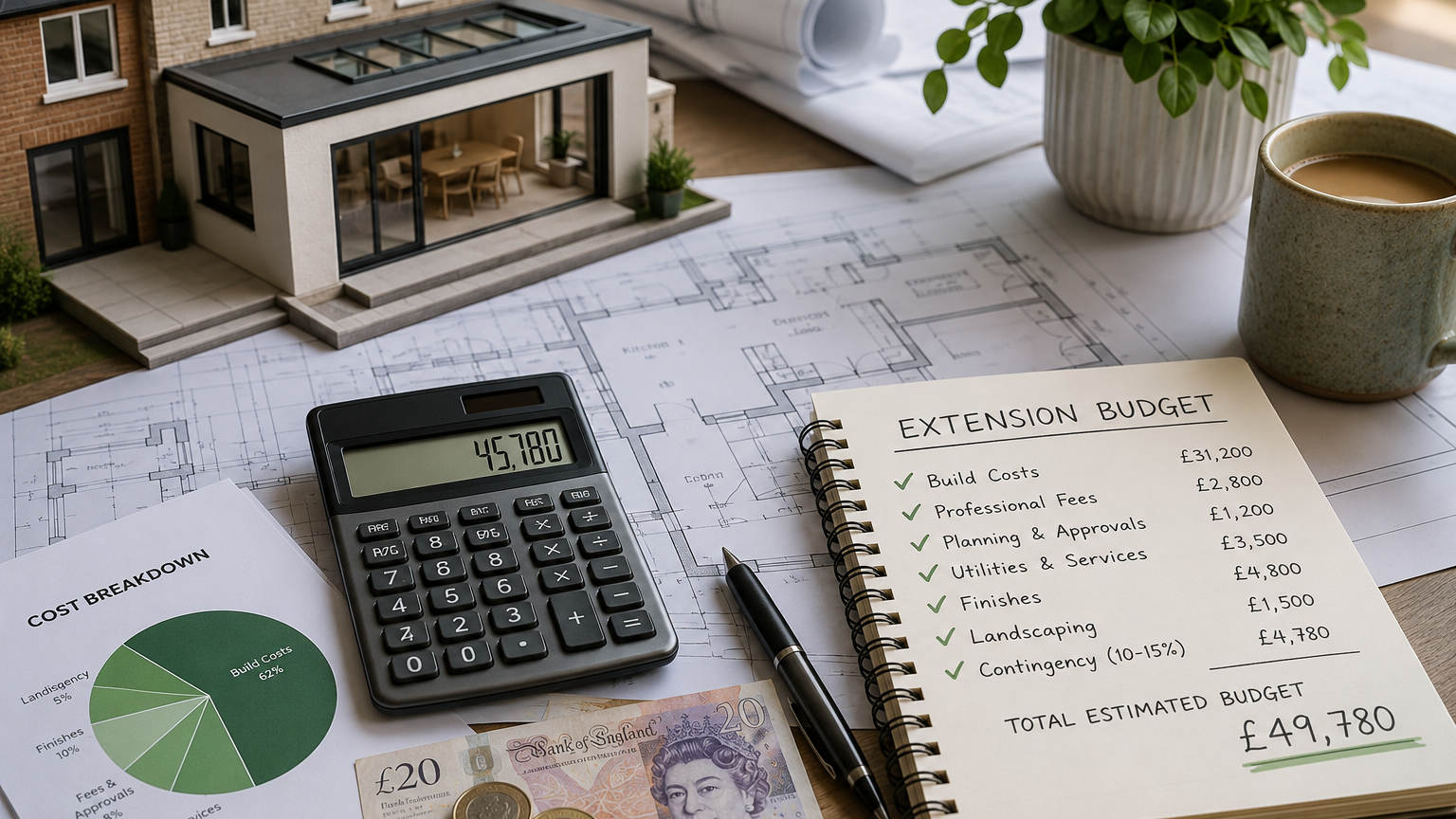
It’s advisable to include a contingency of 10–15% of your total project budget.
This provides flexibility for:
- Unexpected structural issues
- Design changes during construction
- Material price fluctuations
- Unforeseen site conditions
A contingency fund helps keep the project moving if unexpected challenges arise.
Ways to Manage Costs Effectively
To help keep your extension within budget:
- Clearly define the scope of works before construction begins
- Avoid frequent design changes once work is underway
- Choose materials that balance quality with value
- Work with experienced professionals from the outset
If you’re still planning your project, our guide Planning a Home Extension in Newton Abbot: What You Need to Know Before You Start explains the steps you should take before construction begins.
Choosing the right contractor is equally important. Our previous blog Choosing the Right Builder in Newton Abbot: Key Things to Look For provides practical advice on selecting a builder you can trust.
Final Thoughts
Understanding House Extension Cost in Devon isn’t simply about finding an average price per square metre.
The final cost will always depend on your property’s requirements, your design choices, and the complexity of the build. By planning carefully, setting a realistic budget, and working with experienced professionals, you’ll be in a far stronger position to keep your project on track.
Need Help Budgeting Your Extension in Devon?
If you’re planning an extension and would like realistic cost guidance based on your own property and requirements, it’s worth speaking to an experienced team before making any major decisions.
Edleigh Construction can help you assess your plans, provide practical cost advice, and ensure your project is planned properly from the outset.
📧 info@edleighconstruction.co.uk
📞 07568 406 781
FAQs
How much does an extension cost per square metre in Devon?
Typically between £1,800 and £2,800+ per m², depending on the specification, design, and complexity of the project.
What is the cheapest way to build an extension?
Keeping the design simple, using standard materials, and avoiding unnecessary structural complexity can help reduce costs.
Do extension costs include kitchen or bathroom fittings?
Not always. Kitchens, bathrooms, flooring, and premium finishes are often additional costs and should be budgeted separately.
How accurate are initial quotes?
Initial estimates provide a useful guide, but detailed quotations based on completed drawings are generally much more accurate.
Can extension costs change during the build?
Yes. Material price changes, unforeseen structural issues, and design amendments can all affect the final cost, which is why allowing a contingency is recommended.